


Amplifying audio & video.
It’s difficult to use audio and video in research and teaching. AVAnnotate makes it easier.
Designed for…

Researchers
Provide context for AV recordings.

Teachers
Introduce students to annotating AV.

Archivists
Harvest annotations to augment AV metadata.
Featured Projects
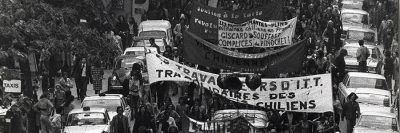
Latin American Press Review Radio Collection
As part of the Latin American Programs of the Longhorn Radio Network, the Latin American Press Review radio program covered all of Latin America and the Caribbean, airing from 1973 to 1974. Divided into two segments, each program began with a news segment that highlighted a variety of reports from across Latin America, while the second half consisted of interviews or discussions with a variety of groups and/or individuals. A diverse number of topics were covered, including human rights abuses, economic conditions, music, popular culture, and the history and politics of the region.
Originally processed in 2010, digital reformatting of analog reel-to-reel audiotapes is ongoing. The annotations cover the programs released between 1973 to 1974. The highlighted annotations are the countries and communities that stood out throughout the segments included within these programs.

Anne Sexton, Sweetbriar College, 1966
This an annotated recording featuring Anne Sexton reading at Sweetbriar in 1966. The recording is held as part of the Anne Sexton Papers at the Harry Ransom Center at the University of Texas, Austin. The annotations were created by Dr. Tanya Clement.

Auteurism
This project by Jack DeVry Riordan explores the theory and topic of Auteurism and some of the filmmakers who best represent it, including filmmakers Stanley Kubrick, Wes Anderson, Tomás Gutiérrez Alea, Andrei Tarkovsky, Akira Kurosawa, and more.
Synthetic Media Rhetorical Analysis
This is a collection of AVAnnotate projects created by students in RHE 309J: Rhetoric of AI in spring 2026. The course explores the literacies required for critical engagement with generative artificial intelligence across contexts relevant to writing. In this assignment module, the term “synthetic” refers to audio, video, text, or imagery that has been produced or manipulated by generative artificial intelligence (GenAI). The assignment culminated in this exhibit, where students rhetorically analyzed synthetic audiovisual material to not only better navigate and interrogate this media in the real world but also to identify how GenAI produces and manipulates content to give it new meaning and rhetorical force.

Furious Flower Poetry Center Transcriptions
These transcripts of video recordings from the Furious Flower Collection at James Madison University in Harrisburg Virginia were created by Evan Sizemore. The recordings from Furious Flower document interviews and readings by major African American poets, among them Rita Dove, Yusef Komunyakaa, Sonia Sanchez, and Major Jackson, accompanied by contextualizing information about them.
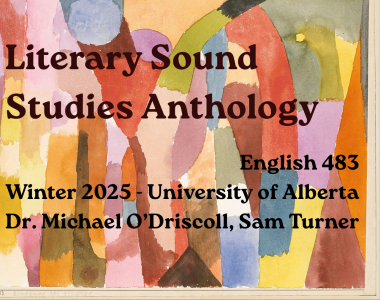
Literary Sound Studies Anthology: English 483, University of Alberta
“Literary Sound Studies: English 483 Class Anthology” is a student-created AVAnnotate project in collaboration with Sam Turner that compiles course projects into a public anthology. It focuses on how literature is performed and heard, using time-coded annotations to analyze voice, rhythm, silence, and audience in recordings of poems and performances. The variety is striking: students explore spoken-word (Sarah Kay & Phil Kaye), contemporary popular music (Taylor Swift’s “Seven”), modern and postwar poetry (Maya Angelou, Audre Lorde, Allen Ginsberg, Wilfred Owen), Indigenous and experimental work (Louise Bernice Halfe, Charles Bernstein), diasporic and sound-poetry pieces (Suheir Hammad, Michael Basinski), and studies of dysfluency (JJJJerome Ellis). What’s most compelling is how the interface’s filters and timestamped notes promote close listening as a collaborative scholarly practice—making technical features like caesura, timbre, pitch, and audience sound clear and accessible to a general, knowledgeable audience.
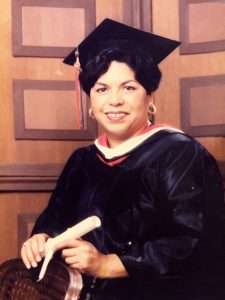
En Sus Propios Poemas: The Life and Legacy of Diana Montejano
This project by Kara Alexandra Culp explores the life and legacy of the San Antonio poet, civil rights activist, and educator Diana Montejano. En Sus Propios Poemas brings her story out of the archives and into the light, tracing how the Chicano Movement, San Antonio, and her own extraordinary voice shaped her work.

Radio Venceremos
In Vera Burrows’s AVAnnotate project “The Power and Reality of Radio During Revolution / El poder y la realidad de la radio durante revolución,” Burrows presents her research on a collection of civil war recordings from a Salvadoran rebel radio station, Radio Venceremos, to both anglophone and hispanophone audiences. She does so by creating two sets of annotations on the same audio events: one annotation set translates the transcripts of these Spanish recordings into English (useful for anglophone audiences) and the other presents contextualizing research on the violence of these recordings into Spanish (useful for hispanophone audiences). This project was originally built for AudiAnnotate, and was re-created with AVAnnotate by Jack D. Riordan.

The Evolution of Lorde
This project by Leiah Bodden traces the artistic development of the New Zealand singer-songwriter Lorde through a curated selection of audiovisual materials that include music videos, performances, and interviews. The annotations highlight the evolution of her style, themes, and public persona across her career, moving from the minimalist detachment of Pure Heroine to the emotional and aesthetic richness of Melodrama and the introspective calm of Solar Power. Each annotation set categorizes observations of structure, context, impact, and literary devices, offering a layered analysis of her creative output. Taken together, the project demonstrates how Lorde’s music and visual presentation create a narrative of growth, transformation, and identity over time.
Sponsors


